What If the Shop Assistant Is a Bot?
What this means
Chatbots help small shops move faster — and fake “support” chats can wear the same friendly face. Keep money off the chat rails.
Note: This site may show light ads and occasional affiliate links. How that works.
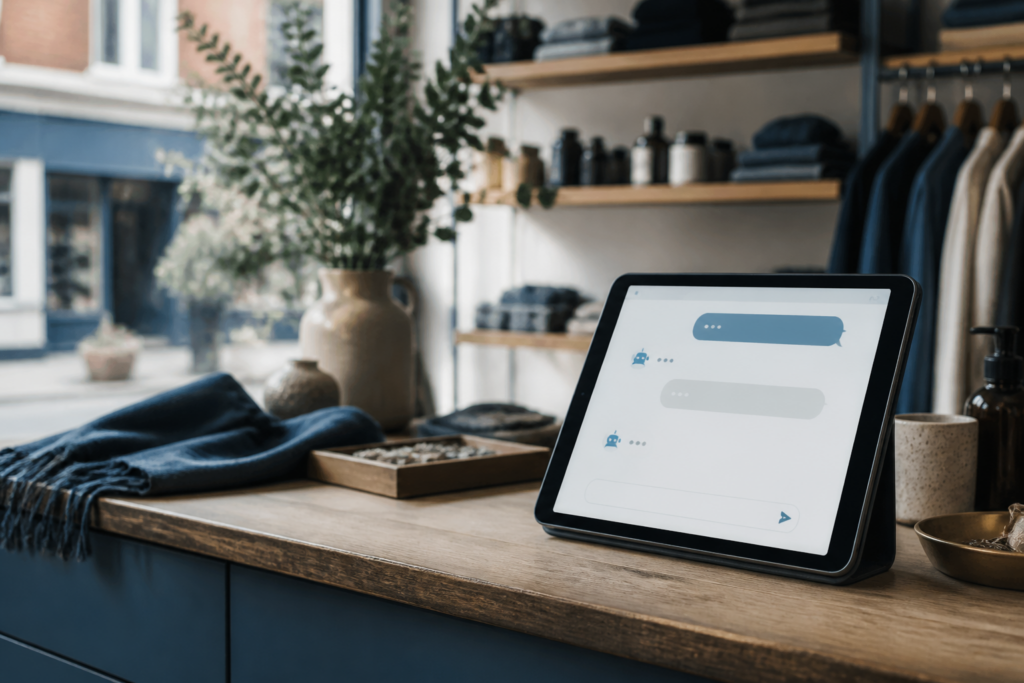
On a busy counter, a chatbot that answers “Do you have this in blue?” feels like progress. Customers get speed. Staff get fewer repeat questions.
The same channel can be copied. Fake “shop support” bots, hijacked widgets, and lookalike chat links turn helpfulness into a quiet social-engineering desk — especially when the bot asks for card details, one-time codes, or remote access “to fix your order.”
Remember this: Real shops rarely ask for full card numbers or one-time bank codes in a chat window. When in doubt, use the phone number or site you already trust.
1. Jim’s-eye view (without a full series chapter)
Imagine a customer scans a QR on a delivery note and lands in a chat that wears the shop’s colours. The bot is polite. It apologises for a delay. It asks them to “confirm payment” on a page that is not the real till. The customer thinks they are talking to the shop. They are talking to a trap.
2. Risks for small shops
- Unofficial chat tools bolted on without checking where messages are stored
- Staff pasting customer details into public AI to “write a nicer reply”
- Fake support accounts contacting customers after a real purchase
- Bots given permission to issue refunds or change addresses without a human check
3. Calmer practices
- Publish one official contact path and stick to it.
- Never request full card data or OTP codes via chat.
- Train staff: unexpected “IT fixing the till remotely” is a classic pressure play.
- If you use a bot, keep refunds and account changes on a human approval step.
A habit to keep
Chat is for questions. Money moves on rails you chose.
Shop-floor stories continue in the Jim’s shop series. Customer-facing scams live in the online scams hub.