Compensation Email That Landed in My Inbox This Week
What this means
A sudden compensation email can sound official and helpful. Here’s why you should pause — and how to check it without taking the bait.
Note: This site may show light ads and occasional affiliate links. How that works.
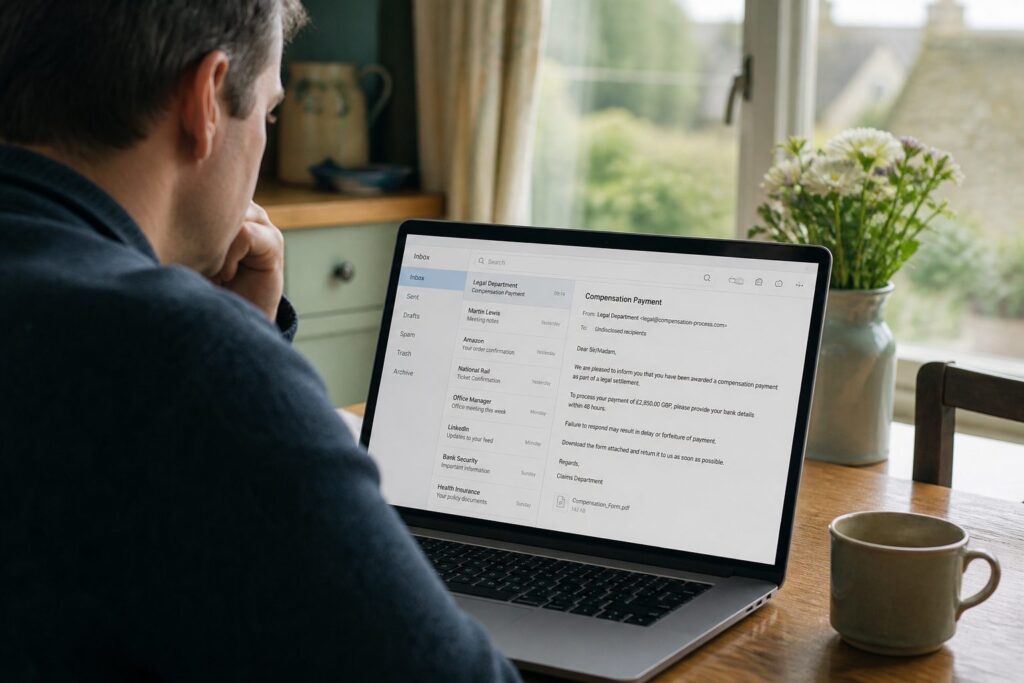
This one arrived looking helpful — official layout, logo, “Aviation Claims Bureau” on the front. Up to £520 compensation for a delayed or cancelled flight, it says.
If you have flown in the last six years, you have probably had a delay. That is exactly why this template works: plausible before you look closely. This one is not a legitimate claims process — it is a data harvest dressed as compensation.
What it claimed
- Up to £520 for flight delay or cancellation
- Official-sounding language and branding
- “Have you experienced a delay in the last six years?” — wide net, no flight details
Why it is bait
- Sender mismatch — “Aviation Claims Bureau” on display; email from an unrelated domain
- Mixed identities — body mentions one company, footer another, domain belongs to neither
- Nothing specific to you — no flight number, date, airline, or booking reference
- Six-year window — covers almost everyone who has flown; that is the point
- Low effort, high volume — not hacking your device; harvesting your details
Click through and you fill in name, email, phone, address, flight information. Data gets sold, spam follows, fake legal services get upsold. Real flight compensation claims need your actual booking — not a blanket “maybe you’re owed money.”
Stop. Pause. Ask three questions.
Stop!
Pause!
Before you click:
- Is it urgent?
- Do you know who it is from?
- Is it really from who it is from?
“Maybe this is real?” is all they need. But does the email know your flight, airline, or date — or just that delays exist? Does the sender domain match the company name? Not sure? Likely a catch. Do not click. Do not reply.
What to do instead
- Delete the email.
- Check the real sender address — not just the display name.
- For genuine EU/UK flight compensation, start with your airline or a regulator-backed route you find yourself — not a link in an unsolicited email.
Already shared details? Watch for follow-up scams and odd calls. Change your email password, turn on multi-factor authentication (mfa). If you gave payment information, tell your bank. More steps: what to do after a miss.
A self-check
Think of your last delayed flight — airline, route, rough date. Could a stranger emailing you out of the blue know any of that? If not, why would their “claim” be real? Next compensation email: would you look for your booking reference first, or tap because £520 sounds nice?
Related: How scams reach you · What to do after a miss · Online scams hub