Phishing and Deepfakes: Pause Before You Trust the Message
What this means
Urgent bank-style alerts and familiar voices are not always real. How to slow down on phishing and deepfake scams.
Note: This site may show light ads and occasional affiliate links. How that works.
An email that looks like your bank — “Urgent: suspicious activity” — is designed to make you move before you think. Phishing has always worked that way. Deepfakes add another polish to voice and video, but the ask is still the same: credentials, money, codes, or secrecy on their timeline.
You do not need special tools to respond well: pause, verify through a channel you already trust, and do not use the links or numbers in the message. Fluency is costume, not proof.
Common phishing tricks
- Email phishing — fake bank or shop messages with suspicious links
- Text scams (smishing) — “Your package is delayed, click here” when there is no package
- Voice scams (vishing) — callers pretending to be tech support, banks, or family in distress
- Fake social accounts — scammers posing as brands, influencers, or friends
- Clone websites — pages that look identical to the real login except they steal your details
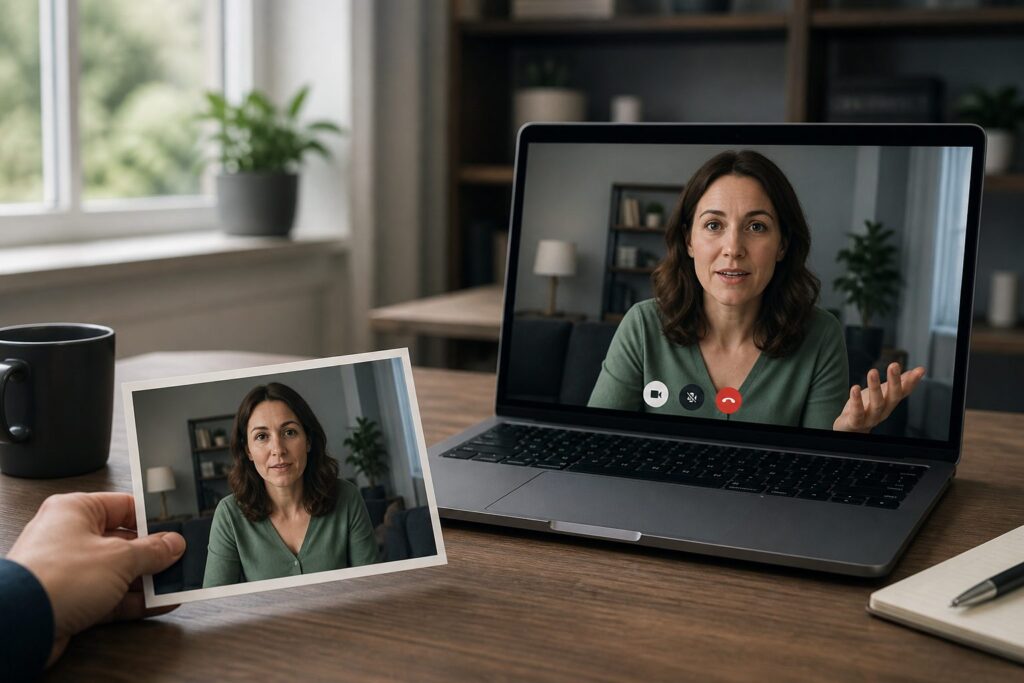
Deepfakes — voice and video fakes
- Fake voice calls — a cloned boss asking for a wire transfer
- Fake video messages — “your manager” on a call that is not really them
- Ai chat scams — bots pretending to be customer service
The polish is new. The levers are not: urgency, authority, secrecy.
At the moment of risk
Stop! Pause! Is it urgent? Do you know who it is from? Is it really from who it says it is? If a voice or video feels right but the request is odd — money, passwords, codes, secrecy — call back on a number you already trust. Not the one in the message.
What helps
- Verify out of band — separate channel, known number
- Hover or long-press links before you click
- Mfa on email and banking
- Treat urgency as a warning sign, not a reason to hurry
A self-check
If you got a voice note right now from someone you know asking for an urgent transfer — would you send it, or would you ring them back first? That split-second answer is the habit worth keeping.
Related: Spear phishing · Online scams hub